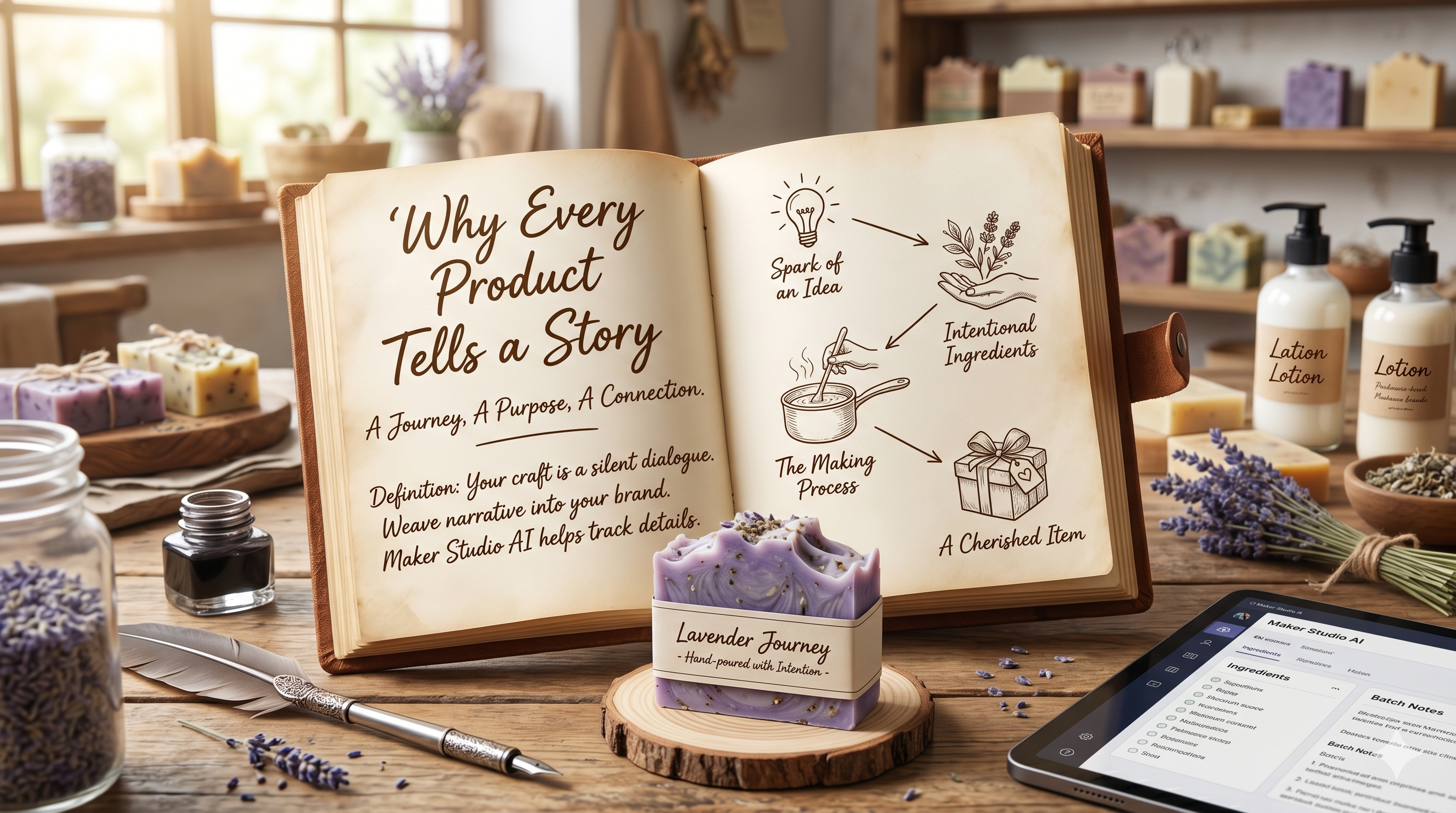
Definition
Every bar of soap, every lotion, every candle you create isn't just a collection of ingredients; it's a narrative. This concept means that from the initial spark of an idea to the final packaging, your product embodies a journey, a purpose, and a connection. It's about recognizing that consumers don't just buy an item; they invest in the story behind it – the passion, the process, the values, and the unique experience it promises.
The Heart of Your Handmade Brand
Your products aren't just items; they are expressions of your passion and purpose, forming the core narrative of your brand.
For a maker, this translates into understanding that your craft is inherently communicative. The choice of oils, the scent profile, the color palette, even the texture – each element contributes to a silent dialogue with your customer. It's about intentionality, ensuring that every decision made during production reinforces the overarching message you wish to convey, making your product more than just a commodity, but a piece of your brand's soul.
This story isn't always explicit; often, it's woven into the sensory experience and the perceived quality. It's the difference between a generic item and a cherished one. By embracing this idea, makers move beyond mere production to become storytellers, crafting not just products, but experiences and emotional connections that resonate deeply with their audience.
Why It Matters
Understanding that every product tells a story fundamentally shifts a maker's perspective from transactional selling to relational engagement. It moves the focus from simply manufacturing goods to cultivating a brand identity and fostering customer loyalty. When makers recognize their products as narratives, they begin to infuse greater meaning and purpose into their work, elevating their craft beyond a hobby or a business into an art form.
This insight empowers makers to differentiate themselves in a crowded market. In an era where consumers are increasingly seeking authenticity and connection, a compelling product story becomes a powerful competitive advantage. It allows makers to articulate their unique value proposition, justifying premium pricing and attracting customers who align with their vision and values, rather than competing solely on price.
Furthermore, this perspective fosters a deeper connection between the maker and their creations. It encourages meticulous attention to detail, ethical sourcing, and sustainable practices, as these elements become integral chapters in the product's story. This not only enhances product quality but also builds a resilient brand narrative that can adapt and evolve, ensuring long-term success and personal fulfillment.
What It Solves
This concept directly addresses the common maker frustration of feeling like their products are interchangeable with mass-produced alternatives. It combats the perception that handmade goods are merely 'expensive versions' of store-bought items by highlighting the intrinsic value and unique narrative embedded in each creation. It provides a framework for makers to articulate why their products are special, moving beyond basic features to emotional benefits.
It also solves the challenge of inconsistent branding and messaging. Without a clear understanding of the product's story, marketing efforts can feel disjointed, and customer communication can lack impact. By defining the narrative, makers gain clarity on their brand's voice, visual identity, and overall market positioning, ensuring every touchpoint reinforces a cohesive and memorable experience.
Finally, it helps overcome the hurdle of undervaluing one's own work. Many makers struggle with pricing their products appropriately, often undercharging due to a lack of confidence in their perceived value. By recognizing the rich story and effort behind each item, makers can confidently assign a value that reflects not just the materials and labor, but also the artistry, passion, and unique narrative that makes their product truly one-of-a-kind.
Where It Shows Up
Why Your Story is Your Superpower
In a crowded market, a compelling narrative differentiates your handmade goods and attracts customers who truly connect with your vision.
The product's story shows up vividly in the studio, long before a single item is sold. It's in the careful selection of a new fragrance oil, chosen not just for its scent, but for the mood or memory it evokes. It's in the meticulous process of a new recipe formulation, where each ingredient is a character, and their interaction creates the plot. You see it in the organized chaos of your workspace, where tools and materials are arranged with a purpose, reflecting the intentionality of your craft.
In the conversation with a customer, the product's story is the unspoken connection. When a customer asks, 'What inspired this scent?' or 'How do you make your soap so creamy?', they're inviting you to share the narrative. It appears in your product descriptions, whether online or on a label, where words like 'hand-poured with intention' or 'crafted from nourishing botanicals' are not just descriptors, but story beats. It's the anecdote you share at a market about the challenge of perfecting a particular swirl design.
This narrative also extends to the spreadsheet and business decisions. The story influences which products you choose to scale, which ingredients you invest in, and how you allocate your marketing budget. It guides your photography, ensuring images capture the essence of the product's journey. Even in analyzing sales data, understanding the story helps interpret why certain products resonate more, informing future creative and business strategies.
When I first started Live Soap School, I was so focused on the 'how-to' – the exact measurements, the perfect temperatures, the right curing times. I saw my soaps as successful if they looked good and performed well. But I quickly learned that wasn't enough. Customers would ask, 'What's special about your soap?' and I realized I needed to give them more than just ingredients; I needed to give them a reason to connect.
I remember one batch of lavender soap, it was a disaster initially. The color was off, the scent faded too fast. I almost scrapped it. But instead, I leaned into the challenge, researching new essential oil blending techniques and natural colorants. The final product, after much iteration, became one of my best sellers. The story of that struggle, of turning a failure into a triumph, became part of its appeal. It wasn't just lavender soap; it was a testament to perseverance and passion. That's when it clicked for me: every product, even the 'failures,' has a story, and sharing that journey builds trust and genuine connection.
Apply this in Maker Studio AI
Maker Studio AI connects your recipes, batches, inventory, shows, sales, and marketing — built for handmade product makers.
Explore Paid Plans →