Definition
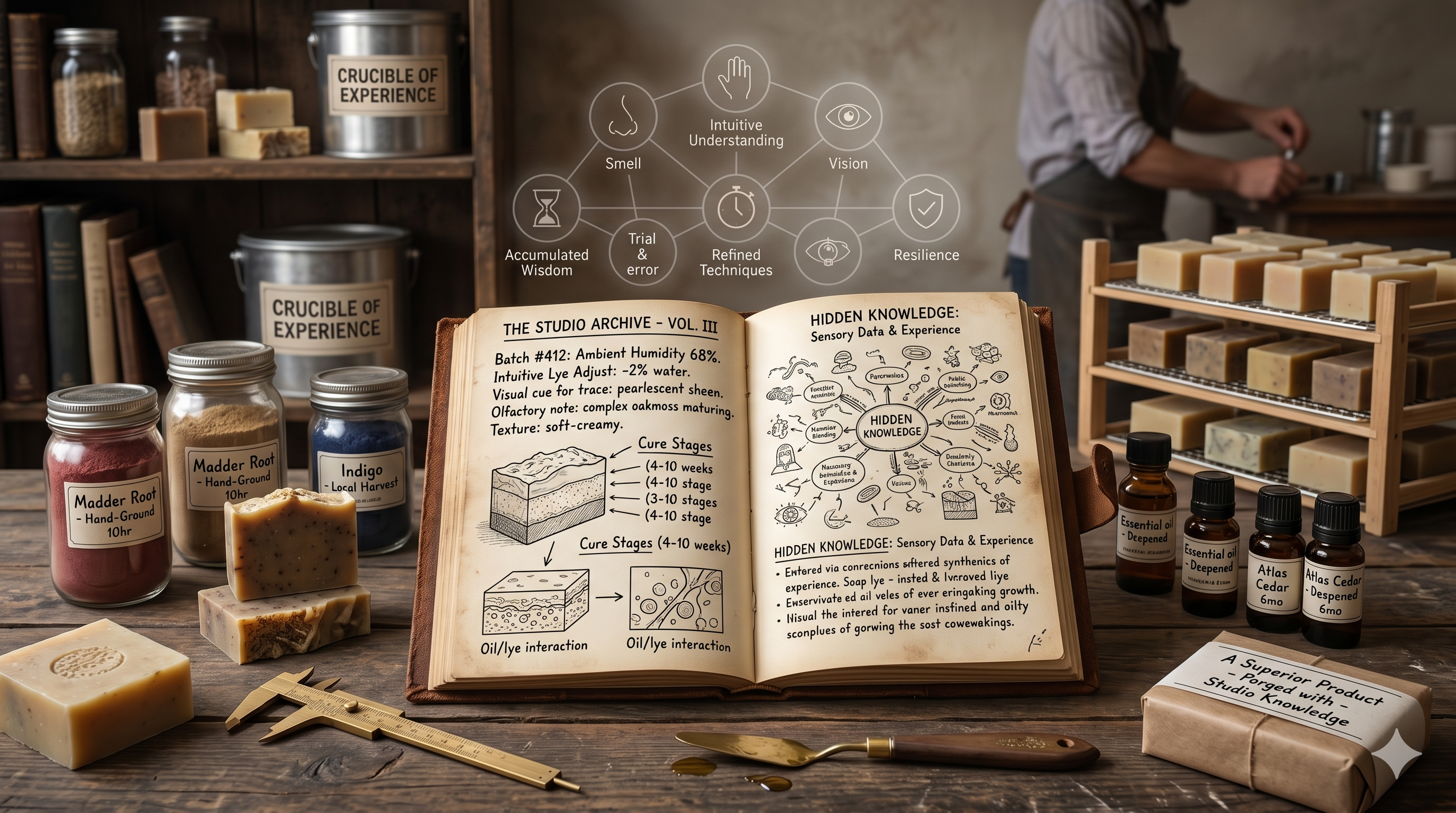
Craft, in the context of a maker's studio, is far more than just the act of creation; it includes the accumulated wisdom, intuitive understanding, and refined techniques developed through countless hours of hands-on work. It's the unspoken language of materials, the subtle cues of a process, and the nuanced adjustments that transform raw ingredients into your product. This hidden knowledge isn't found in books alone; it's forged in the crucible of experience, through trial and error, observation, and persistent practice.
It encompasses the precise feel of a perfect emulsion, the visual indicator of a well-cured bar, or the olfactory signature of a balanced fragrance blend. This deep, embodied understanding allows a maker to anticipate challenges, innovate solutions, and consistently produce high-quality goods that resonate with their customers. It's the difference between following a recipe and truly understanding the 'why' behind each step, enabling adaptation and mastery.
Why It Matters
Understanding the concept of 'Craft' as hidden knowledge fundamentally shifts a maker's perspective from mere production to profound mastery. It encourages a deeper engagement with every stage of the creative process, recognizing that each batch, each formulation, and each interaction with materials contributes to an invaluable internal database of expertise. This perspective fosters resilience, as setbacks are reframed as opportunities to gain deeper insights, rather than just failures.
Embracing this hidden knowledge empowers makers to move beyond imitation, cultivating a unique signature in their work that is difficult for others to replicate. It builds confidence, allowing for intuitive decision-making and problem-solving in real-time, which is crucial when working with dynamic natural ingredients or unpredictable processes. Ultimately, it elevates the maker from a technician to an artisan, infusing their products with authenticity and a story that customers can connect with.
What It Solves
This concept addresses several critical blind spots and frustrations common among makers. Firstly, it combats the feeling of being overwhelmed by inconsistent results, providing a framework to recognize that variations are often opportunities to uncover deeper process understanding rather than just random occurrences. It helps demystify the 'magic' behind successful batches, encouraging systematic observation and documentation of subtle factors that influence outcomes.
Secondly, it solves the challenge of scaling production without losing quality or character. By acknowledging and articulating the hidden knowledge, makers can better translate their intuitive processes into repeatable, teachable methods, ensuring consistency as their business grows. It also alleviates the pressure of constant external validation, as makers learn to trust their own refined judgment and internal compass, reducing reliance on fleeting trends and fostering a more sustainable, authentic creative path.
Where It Shows Up
The hidden knowledge of craft manifests in countless daily scenarios within a maker's studio. It appears when a soap maker instinctively adjusts the water discount based on ambient humidity, even if the recipe doesn't explicitly state it. It's evident in the precise moment a formulator knows a new ingredient blend has reached optimal viscosity, simply by the way it flows from the spatula. This knowledge guides the decision to cure a particular batch of soap for an extra week because of a subtle scent profile that needs more time to mature.
It also shows up in the meticulous organization of ingredients, understanding how their storage conditions impact their efficacy, or in the subtle art of packaging, where the maker's hands intuitively know the right tension for a perfect wrap. In conversations with customers, it's the ability to articulate the 'why' behind a product's unique qualities, drawing on years of accumulated sensory experience rather than just reciting a list of ingredients. Even in the spreadsheet, it's reflected in the nuanced adjustments to costings, accounting for the slight variations in yield that only experience can predict.
I remember early on, I'd follow recipes to the letter, but my batches sometimes felt… flat. It wasn't until I started paying attention to the subtle cues – the way the lye solution felt warm in my hand, the exact sheen of the oil blend before adding the lye, the specific sound of the stick blender when the emulsion was just right – that my soap truly began to sing. I realized the recipe was just a map; the real journey was in learning to read the landscape of the process itself.
When I was teaching, I'd often tell my students, 'Don't just look at the soap; feel it, smell it, listen to it.' It was about cultivating that sensory awareness, that 'hidden knowledge' that transforms a good soap maker into a great one. It's in those moments of intuitive adjustment, born from hundreds of batches, that the true artistry of soap making reveals itself. It's not about being perfect, but about being present and learning from every single interaction with your craft.
Apply this in Maker Studio AI
Maker Studio AI connects your recipes, batches, inventory, shows, sales, and marketing — built for handmade product makers.
Explore Paid Plans →