Definition
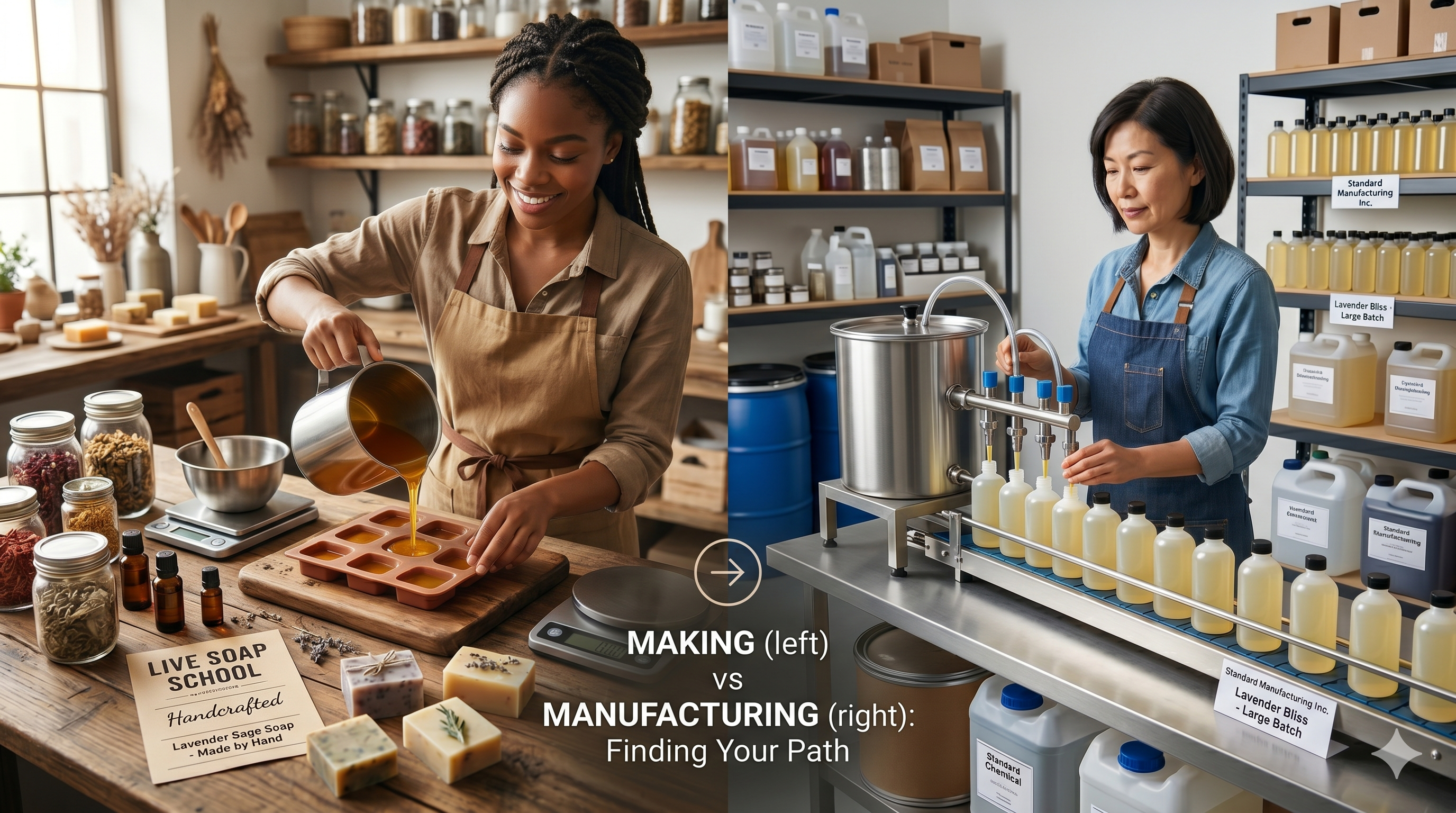
For the artisan, making is an act of creation, deeply intertwined with personal skill, intuition, and the unique characteristics of raw materials. It’s about understanding the subtle variations in a batch of oils, adjusting for humidity, and allowing the process to guide the outcome. Each bar of soap, while consistent in quality, carries the subtle imprint of the maker's hand and the specific conditions of its creation. This approach prioritizes the integrity of the craft and the connection to the material.
Manufacturing, conversely, is about replication and scalability. It seeks to eliminate variability, standardize processes, and produce identical units efficiently. The focus shifts from the individual act of creation to optimizing a system for mass production. While manufacturing aims for consistency, it often achieves it through rigid controls and synthetic inputs that might distance the product from its handcrafted origins. For a small business, understanding this distinction is crucial for defining identity and operational strategy.
Why It Matters
Recognizing the fundamental difference between making and manufacturing empowers a maker to define their business identity and set realistic expectations for growth. If you aspire to be a maker, your value proposition lies in the unique, handcrafted quality and the story behind each product. Trying to force a 'manufacturing' mindset onto a 'making' process can lead to frustration, compromise product integrity, and alienate your core customer base who seek authenticity.
This distinction also impacts pricing, marketing, and operational decisions. A handcrafted item commands a different price point and requires a narrative that celebrates its uniqueness, not its uniformity. Embracing the 'making' philosophy allows for sustainable growth that honors the craft, rather than chasing an unsustainable volume that dilutes its essence. It’s about building a business that reflects your passion and skill, not just a production line.
What It Solves
This concept addresses the common pitfall of small businesses attempting to scale by adopting industrial manufacturing principles too early or inappropriately. It solves the problem of diluted brand identity, where the desire for efficiency overshadows the unique qualities that define a handcrafted product. Makers often struggle with pricing, feeling their products are 'too expensive' when compared to mass-produced alternatives; understanding this difference validates their value.
It also alleviates the pressure to compromise on ingredients or process for the sake of speed or cost reduction, which can lead to burnout and a loss of joy in the craft. By clarifying these roles, makers can avoid the frustration of trying to fit a square peg into a round hole, instead focusing on optimizing their making process rather than mimicking manufacturing techniques that don't align with their core values.
Where It Shows Up
The difference between making and manufacturing shows up vividly in the studio when a maker decides whether to hand-pour each batch of soap or invest in automated filling equipment. It appears in the spreadsheet when calculating the true cost of labor for a small batch versus the theoretical cost of a large, automated run. In conversations with customers, it's evident when explaining why a product might have slight variations or why it's priced higher than a store-bought equivalent, emphasizing the artisanal process.
This distinction also manifests in inventory management: a maker might embrace smaller, more frequent batches to maintain freshness and respond to demand, rather than producing massive quantities to achieve economies of scale. It's in the choice of packaging, the marketing language, and ultimately, in the maker's personal satisfaction derived from creating something unique versus simply producing units.
I remember early on, I felt immense pressure to produce more, faster, to compete with larger brands. I’d look at their efficiency and think, 'I need to be doing that.' But every time I tried to streamline my soap-making process to mimic manufacturing, I lost a piece of the joy, and frankly, the quality suffered. My batches felt less like creations and more like tasks. When I started Live Soap School, I realized that the true value wasn't in how many bars I could make in an hour, but in the care, the ingredients, and the unique touch I brought to each one. I learned to lean into the 'making' – the art, the science, the subtle adjustments – and that's when my business truly began to thrive and connect with my customers.
Apply this in Maker Studio AI
Maker Studio AI connects your recipes, batches, inventory, shows, sales, and marketing — built for handmade product makers.
Explore Paid Plans →